
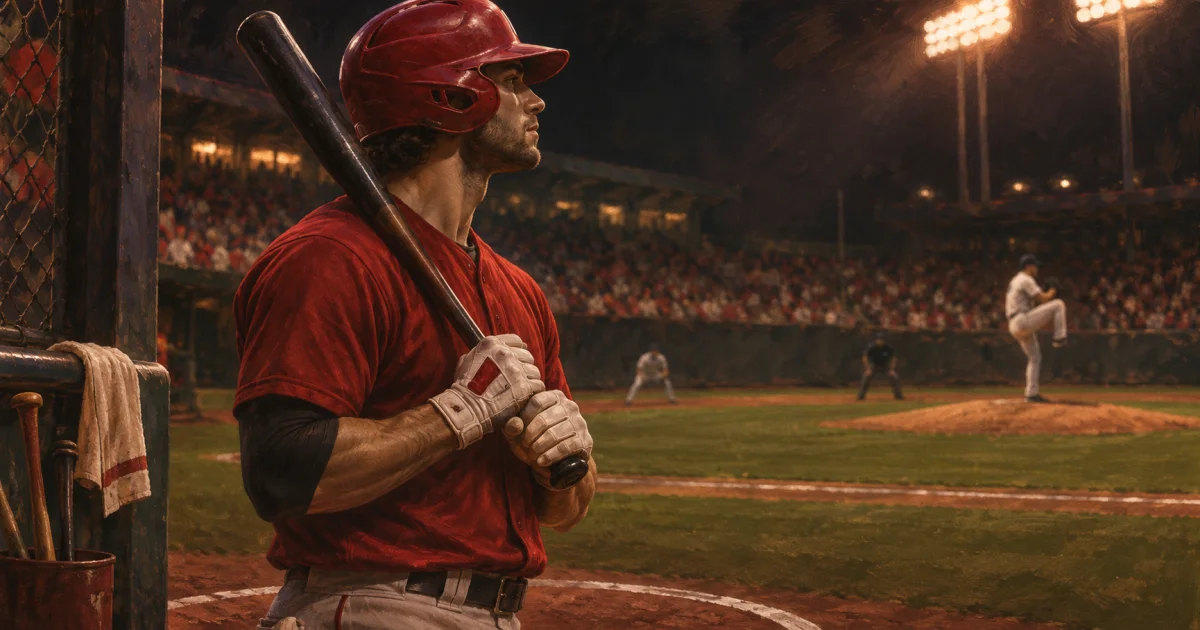
Original editorial illustration.
A clear guide to MLB’s designated hitter: what the DH does, 2026 rule details, how teams lose the DH, and what to watch for during games.
The short answer
A designated hitter (DH) is a player who bats in place of the pitcher. In today’s Major League Baseball, both the American and National Leagues use the DH, and this explainer follows MLB’s 2026 Official Baseball Rules, specifically Rule 5.11.
Practically, the pitcher still pitches and plays defense; the DH’s job is only to hit. That’s why you’ll see nine hitters in the lineup without the pitcher listed as a batter.
How the DH works (MLB, 2026 rule edition)
Before first pitch, a team may name a DH on the lineup card; if it doesn’t, it cannot add a DH later that game. The DH must also be selected before the game and is expected to appear at least once, unless the opponent changes pitchers before that first turn.
If another player pinch-hits or pinch-runs for the DH, that substitute becomes the new DH for the rest of the game and the DH slot remains in the same lineup position. The DH does not take the field on defense unless the club accepts the consequences described below.
This article refers to Major League Baseball and the 2026 edition of the Official Baseball Rules, which MLB links on its Rules page.
How a team can lose the DH
Teams can unintentionally “lose the DH” midgame. When that happens, the pitcher (or a new pitcher later) must bat as part of the regular order the rest of the way. Key ways a club loses the DH include:
- The DH takes a defensive position. The DH keeps his batting-order spot as a position player, but the team no longer has a separate hitter for the pitcher.
- The current pitcher bats or pinch-runs for the DH. Using the pitcher in the DH’s place ends the DH for the rest of the game.
- A player pinch-hits for someone else and later becomes the pitcher. Once that player goes to the mound, the club’s DH role is gone.
Quick game situations
Example 1 (hypothetical numbers): Your lineup lists Lee as the DH batting third. In the seventh, an injury forces Lee to play first base. From that moment, your club has no DH; the pitcher will have to hit later as part of the batting order. Expect different pinch-hit moves to cover that spot when it comes up.
Example 2: The manager wants speed on the bases and uses the pitcher to pinch-run for the DH in the eighth. That decision immediately terminates the DH, so the pitcher (or a later pitcher) becomes a batting-order participant the rest of the game.
Example 3: A bench bat pinch-hits for the shortstop in the sixth, then takes the mound in the seventh. Because a player who pinch-hit for someone else later became the pitcher, the DH is lost. Managers usually avoid this unless the tactical payoff is worth sacrificing the DH.
Two-way player wrinkle
Since 2022, MLB allows a special flexibility for a starting pitcher who is also hitting: he can be listed twice on the lineup card, once as pitcher and once as DH. He’s treated as two separate people for DH purposes. If he’s replaced on the mound, he may keep batting as the DH; if he’s replaced as the DH, he may keep pitching (he just can’t continue to bat for himself).
This wrinkle is why you’ll sometimes hear that a two-way star can remain in the game offensively even after a pitching change. The exception has limits; once he’s moved to a non-pitching defensive position, the DH is no longer available.
What to watch and common mix-ups
Watch the pregame lineup announcement: if a team doesn’t name a DH before the first pitch, that club has chosen to let its pitcher bat and can’t add a DH later. Broadcasters will usually flag this immediately.
In-game, listen for cues like “the DH will play first base” or “the pitcher will run for the DH.” Either phrase signals the DH is being forfeited; expect the manager to juggle pinch-hitters and double-switches to cover the pitcher’s new batting responsibility.
Common misconceptions: the DH only bats for the pitcher (not for a fielder); pinch-hitting for the DH does not by itself erase the DH; the pinch-hitter simply becomes the new DH; and “universal DH” means both leagues use it, not that a team must select one in every game.