
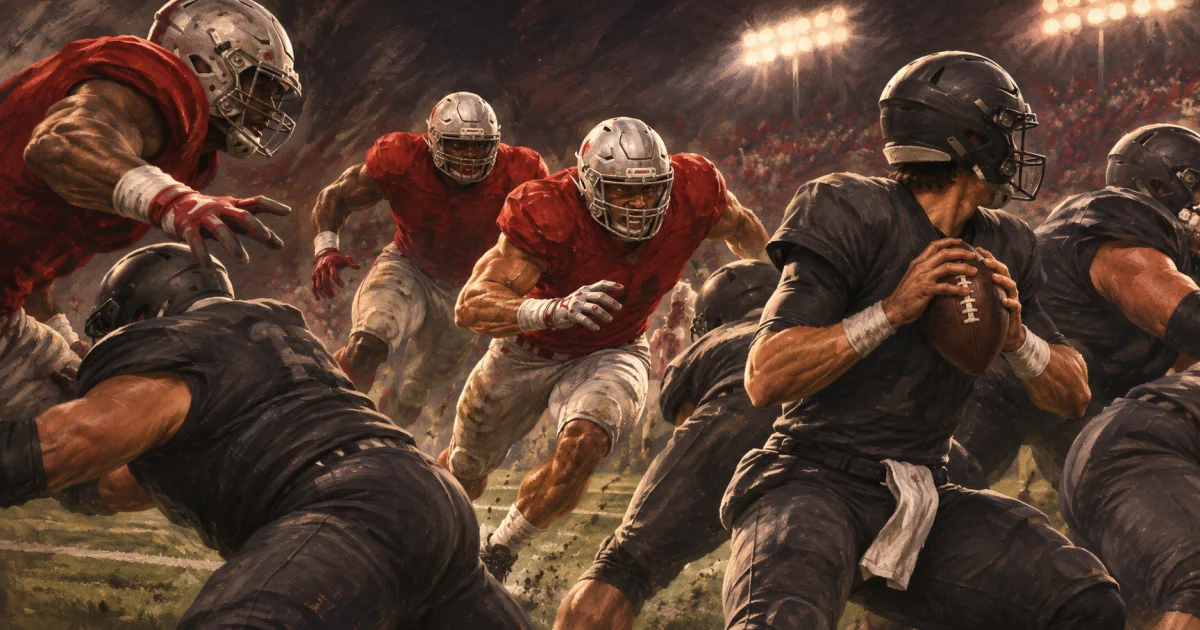
Original editorial illustration.
A clear NFL explainer: what a blitz is, why defenses send extra rushers, how it works, risks, rules that govern it, and what to watch during games.
The short answer
A blitz is a defensive call to send extra pass rushers at the quarterback, beyond the usual four down linemen. In NFL tracking and analytics, a play is typically tagged as a blitz when a defense rushes five or more players. That’s the most practical, on‑field way to spot a blitz as you watch.
Who are those “extras”? Often linebackers or defensive backs, not just linemen, join the rush. That’s why you’ll hear “corner blitz” or “safety blitz” during a broadcast.
Why send extra rushers?
Defenses blitz to speed up the quarterback’s decision, collapse the pocket, and chase negative plays like sacks or hurried throws. Sending five or six rushers can outnumber the offense’s blockers and create a free runner.
The tradeoff is thinner coverage. With fewer defenders patrolling zones or matching receivers, one missed tackle or a well‑timed quick throw can become a big gain. Coordinators weigh down, distance, field position, and opponent tendencies before deciding if the gamble is worth it.
How it works on a typical down
Picture a 3rd‑and‑7. The defense shows two linebackers “mugging” the A‑gaps over the center. On the snap, the nickel corner also comes from the slot. That’s five rushers. If the running back steps inside to pick up a linebacker, the slot may come free off the edge. (This is a hypothetical example, not a live stat.)
Now flip it. Same look, but only four actually rush while a defensive end drops under a slant. That’s a simulated pressure, not a blitz by the 5+ definition, even though it looked like one before the snap. Recognizing who truly rushes versus who drops is why veteran quarterbacks point and adjust protection last second.
What the rules do (and don’t) say
This explainer uses NFL rules, with the 2026 NFL Rulebook as the current edition as of November 3, 2026. The rulebook doesn’t create a special “blitz” foul; it governs how defenders may rush and contact opponents. For example, a blitzer must remain onside (no neutral‑zone infraction or offside), avoid illegal contact with eligible receivers downfield, and cannot commit roughing the passer when he arrives. Those constraints shape how aggressively teams design pressures.
blitzing is legal strategy; penalties occur only if a defender violates existing snap, contact, or safety rules while executing it. That’s why you’ll see clean, well‑timed hits go unpenalized while late, high, or low contact on the passer draws flags.
Common misunderstandings
Myth: “Every five‑man rush is man coverage.” Not necessarily. Zone blitzes drop one or more linemen into short zones while five rush. The back end can still play zone principles.
Myth: “A blitz always comes from the middle.” Edge and slot blitzes are common, and safeties can be part of the pressure, too. The hallmark is extra rushers, not location.
Myth: “If the defense shows pressure, it’s a blitz.” Pre‑snap threats are often disguises. If only four ultimately rush and others drop, it isn’t a blitz by the 5+ standard even if it looked scary pre‑snap.
What to watch during a game
Before the snap, watch for linebackers walked up in the A‑gaps, a slot corner creeping toward the line, or a safety rotating late; classic tells that extra rushers might come. Offenses will counter by sliding protection, keeping a tight end in, or using a running back to scan inside‑out.
At the snap, track the count: if five or more actually attack the quarterback, you’ve spotted a blitz. Then shift your eyes to the space they vacated; hot routes, quick slants, screens, and shallow crossers often aim right where the pressure left.